Goodbye forwardRef: Simplifying Refs in React 19
React 19 has simplified how we handle Refs. Discover how ref is now a standard prop and why forwardRef is on its way out.
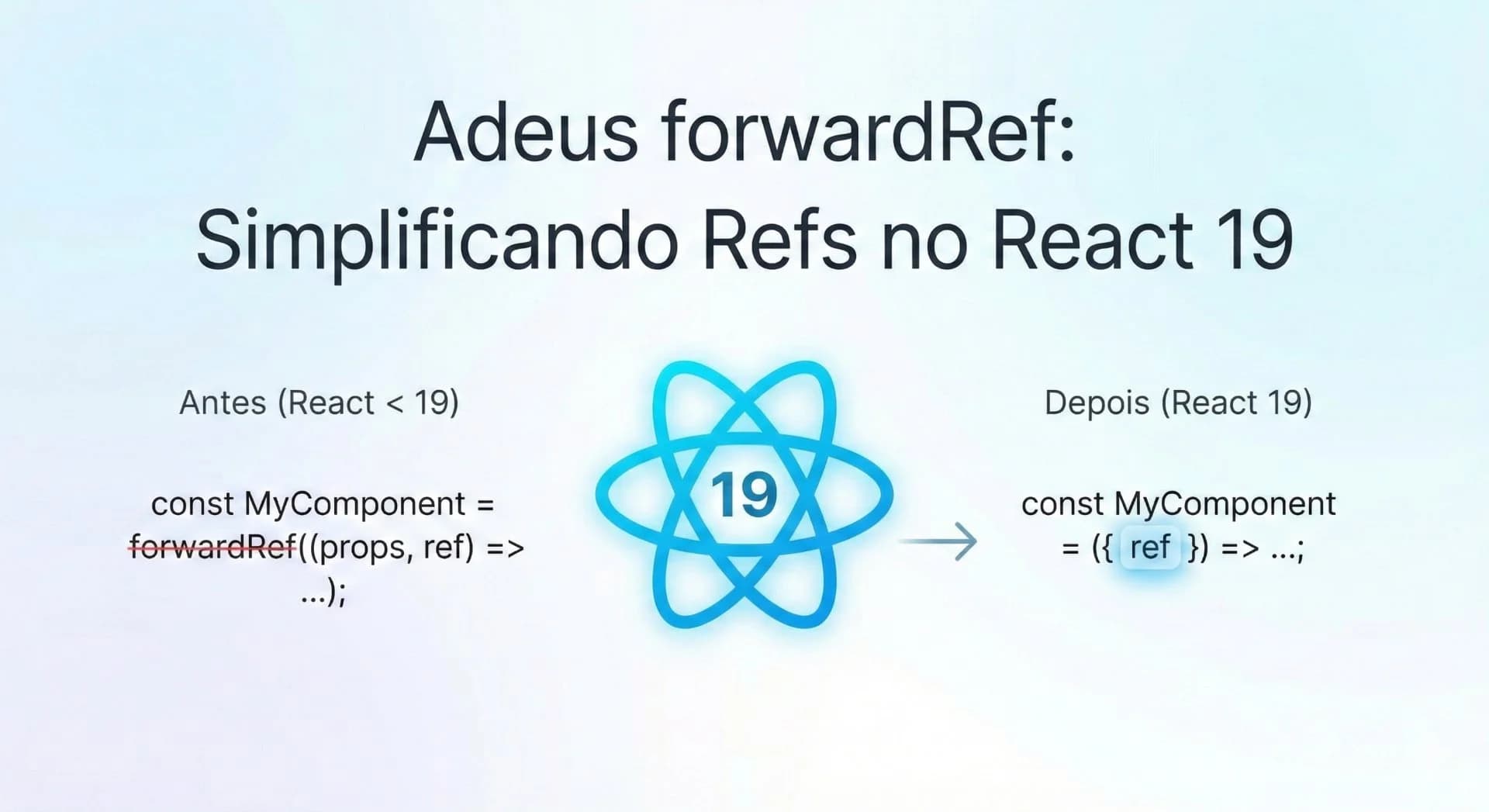
TL;DR: In React 19, ref has become a standard prop in functional components. You no longer need to use forwardRef to pass a reference from a parent component to a child; simply receive the ref prop like any other.
If you've ever needed to access a DOM element of a child component from a parent component in React, you've likely had to deal with the famous (and sometimes confusing) forwardRef.
While functional, forwardRef added an extra layer of boilerplate and a syntax that didn't feel "natural" compared to other props. With the release of React 19, this headache has finally come to an end.
The Problem with forwardRef
Traditionally, the ref prop was treated specially by React. It wasn't automatically passed to the component; instead, you needed to "wrap" your functional component with forwardRef:
// ❌ The old way (React < 19)
import { forwardRef } from 'react';

const MyInput = forwardRef((props, ref) => {
  return <input {...props} ref={ref} />;
});

// Usage
const inputRef = useRef(null);
<MyInput ref={inputRef} />;
This created extra indentation and made it harder to read, especially when combined with TypeScript or other HOCs (Higher-Order Components).
Goodbye forwardRef: The React 19 Way
In React 19, ref is now just another prop. You can receive it directly in your functional component's argument list:
// ✅ The new way (React 19)
function MyInput({ label, ref, ...props }) {
  return (
    <label>
      {label}
      <input {...props} ref={ref} />
    </label>
  );
}

// Usage (exactly the same)
const inputRef = useRef(null);
<MyInput label="Name:" ref={inputRef} />;
Simple as that. No extra functions, no special syntax. ref now behaves like any other property you pass to your component.
What about TypeScript?
For those using TypeScript, the change also brings simplicity. You no longer need the complex generic type of forwardRef. Just define the ref prop type in your interface:
interface MyInputProps extends React.InputHTMLAttributes<HTMLInputElement> {
  label: string;
  ref?: React.Ref<HTMLInputElement>;
}

function MyInput({ label, ref, ...props }: MyInputProps) {
  return (
    <label>
      {label}
      <input {...props} ref={ref} />
    </label>
  );
}
What happens to old code?
Don't worry! forwardRef hasn't been removed from React 19. It still works to ensure backward compatibility. However, it is now considered a legacy API for functional components.
The official recommendation is to migrate to the new "ref as a prop" pattern as you update your components.
Conclusion
Changing ref to a standard prop is a great example of how React is evolving to become simpler and more intuitive. Fewer special APIs mean fewer concepts to learn and less boilerplate to write.
The code is cleaner, the intent is clearer, and development flows better.
Reference:
What do you think of this change? Have you started migrating your components to React 19? 🚀